


Aomori and more
- Sort by
- Popularity
- Name
-
Hagi ware Hagi yaki
- Ceramic
- Yamaguchi
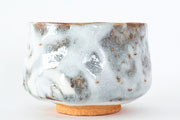
Hagi ware (called Hagi yaki in Japanese) is a form of porcelain produced mainly in the city of Hagi in Yamaguchi prefecture. Hagi ware is rarely decorated, remaining as simple as possible to make the most of the features of the clay. This simplici…
View more
-
Tobe ware Tobe yaki
- Ceramic
- Ehime
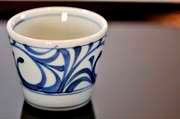
Tobe ware (called Tobe yaki in Japanese) is a form of ceramic ware produced around the town of Tobe in Iyo district of Ehime prefecture. Production began in the middle of the Edo period (1603-1868) and it was registered as a traditional craft by t…
View more
-
Tsugaru lacquerware Tsugaru nuri
- Lacquerware
- Aomori

Tsugaru lacquerware (called tsugaru nuri in Japanese) is produced around the city of Hirosaki in Aomori prefecture. Lacquerware has been produced in this region since the middle of the Edo period (1603-1868), but it began to be called Tsugaru lacq…
View more
-
Beppu bamboo crafts Beppu take zaiku
- Wood, bamboo crafts
- Oita
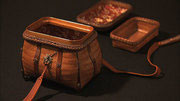
Beppu take-zaiku are bamboo crafts produced in the city of Beppu, Oita prefecture mainly from odake bamboo* grown and harvested locally. This craft is entirely handmade and uses a distinctive range of basic weaving techniques. It is also the only …
View more
-
Akama inkstone Akama suzuri
- Writing tools
- Yamaguchi
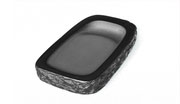
Akama inkstone (called Akama suzuri in Japanese) is produced around the cities of Shimonoseki and Ube in Yamaguchi prefecture. A type of stone called akama, an ideal material for producing the inkstones, is used for Akama inkstone. Therefore this …
View more
-
Ouchi lacquerware Ouchi nuri
- Lacquerware
- Yamaguchi
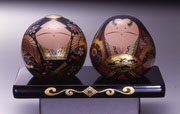
Ouchi lacquerware (called Ouchi nuri in Japanese) is produced around the city of Yamaguchi, in Yamaguchi prefecture. This craft emerged under the Ouchi clan, which boasted significant influence and power in the region during the Muromachi period (…
View more
-
Ozu traditional Japanese paper Ozu washi
- Traditional Japanese paper
- Ehime
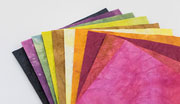
Ozu traditional Japanese paper (called Ozu washi in Japanese) is a handmade paper made in the town of Uchiko, Ehime prefecture. The history of papermaking of Ozu washi dates back to the Heian period (794-1185), and the current style of Ozu washi e…
View more
-
Nibutani carved wooden tray Nibutani ita
- Wood, bamboo crafts
- Hokkaido
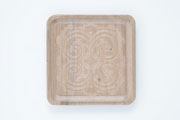
Nibutani Carved Wooden Trays (called Nibutani ita in Japanese) are produced in Biratori, Hokkaido. The origin of the town name, is an Ainu language word for cliff, pirauturu. This craft is known for its patterns like a spiral pattern called moreun…
View more
-
Nibutani bark cloth Nibutani attoushi
- Woven textiles
- Hokkaido
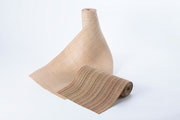
Nibutani Bark Cloth (called Nibutani-attushi in Japanese) is a bark fiber fabric produced in the region surrounding the the town of Biratori, Hokkaido. The term Nibutani originates from niputai which is an Ainu (indigenous people of north Japan) l…
View more
- 1
