


Dyed textiles and more
- Sort by
- Popularity
- Name
-
Naruko lacquerware Naruko shikki
- Lacquerware
- Miyagi
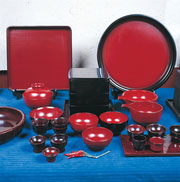
Naruko lacquerware (called Naruko shikki in Japanese) is a form of lacquerware produced around the city of Osaki, Miyagi prefecture. Lacquerware is a craft coating layers of lacquer on wooden tableware and other utensils. Lacquerware is produced i…
View more
-
Niigata lacquerware Niigata shikki
- Lacquerware
- Niigata
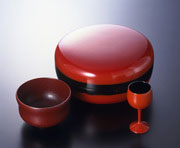
Niigata Lacquerware (called Niigata Shikki in Japanese) is a form of lacquerware produced in the area around the city of Niigata, Niigata prefecture. This craft has various coating techniques such as hana-nuri, ishime-nuri, nishiki-nuri, isokusa-n…
View more
-
Ozu traditional Japanese paper Ozu washi
- Traditional Japanese paper
- Ehime
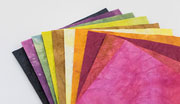
Ozu traditional Japanese paper (called Ozu washi in Japanese) is a handmade paper made in the town of Uchiko, Ehime prefecture. The history of papermaking of Ozu washi dates back to the Heian period (794-1185), and the current style of Ozu washi e…
View more
-
Echu traditional Japanese paper Echu washi
- Traditional Japanese paper
- Toyama
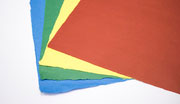
Etchu washi is traditional Japanese paper made in Asahi, Yatsuo, and Taira in Toyama prefecture. Each production area makes their own type of washi which are called Gokayama washi, Yatsuo washi, and Birudan washi. This craft has slight regional va…
View more
-
Kyo-komon textiles Kyo komon
- Dyed textiles
- Kyoto
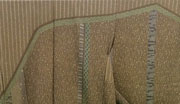
Kyo Komon are fine-patterned textiles produced in Kyoto prefecture. Kyoto, a historical center of dyed textiles, is renowned for its superb fabrics resulting from exceptional dyeing and stencil making. This craft has beautifully elegant colored pa…
View more
-
Murakami carved lacquerware Murakami kibori tsuishu
- Lacquerware
- Niigata
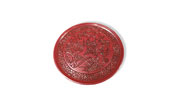
Murakami Carved Lacquerware (called Murakami Kibori Tsuishu in Japanese) is produced in the area around Murakami, Niigata prefecture. The region, which was formerly the Murakami domain, has been famous for its production of natural lacquer since t…
View more
-
Uchiyama Japanese paper Uchiyama gami
- Traditional Japanese paper
- Nagano
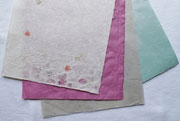
Uchiyama Gami is a type of traditional Japanese paper made in the Oku-shinano region of northern Nagano prefecture. As a region that gets heavy snowfall during the winter, papermaking production developed to provide supplementary income. This craf…
View more
-
Arimatsu tie-dyeing Arimatsu narumi shibori
- Dyed textiles
- Aichi
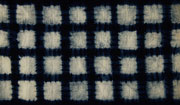
Arimatsu Narumi Shibori is a tie-dye fabric produced in the area surrounding Nagoya, Aichi prefecture. Many of the tie-dye products in Japan are produced here. The tie-dye products are designated as a traditional national craft. Arimatsu Narumi Sh…
View more
-
Ryukyu traditional textiles Ryukyu bingata
- Dyed textiles
- Okinawa
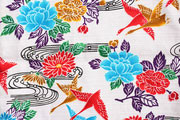
Ryukyu Bingata is a dyed and woven textile produced around Shuri, Okinawa prefecture. Its origin goes back to the 14th to 15th century. The ladies of the royal family or the families of the warrior class wore Ryukyu Bingata. There are two kinds of…
View more
-
Tokyo textiles Tokyo tegaki yuzen
- Dyed textiles
- Tokyo

Tokyo Tegaki Yuzen are kimono textiles produced in Shinjuku Ward, Nerima Ward and Nakano Ward, Tokyo. Having been produced in the townsmen culture of Edo (current Tokyo), a refined stylishness is expressed in its soft, subdued colors. Unlike other…
View more
-
Kyo dyed textiles Kyo kanoko shibori
- Dyed textiles
- Kyoto
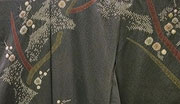
Kyo Kanoko Shibori is a dyed textile produced in Kyoto Prefecture. Shibori is one of the tie-dye techniques that create patterns by tying the textile before dyeing so that the tied parts remain white. This particular Shibori resembles fawn spots a…
View more
-
Nagoya kimono-dyeing Nagoya kuromontsuki zome
- Dyed textiles
- Aichi
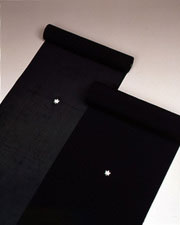
Nagoya Kuromontsuki Zome is a dyed and woven textile produced in the region surrounding Nagoya City, Aichi Prefecture. Kuromontsuki is a kimono worn at weddings or funerals and it has been popular since the Edo period (1603 - 1868) in Nagoya among…
View more
-
Kyo kimono-dyeing Kyo kuromontsuki zome
- Dyed textiles
- Kyoto
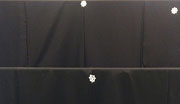
Kyo Kuromontsuki Zome is a dyed fabric produced in the areas including Kyoto city and Kameoka city in Kyoto prefecture. The characteristic of Kyo Kuromontsuki Zome is its high quality and graceful black color. The kimonos that are worn for funeral…
View more
-
Naniwa Honzome Hand Dyeing Naniwa honzome
- Dyed textiles
- Osaka
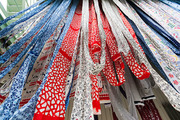
Naniwa Honzome Hand Dyeing is a traditional Japanese dyeing method, of which products are mainly produced in Sakai and Kashiwara, Osaka Prefecture. Osaka was a large producing center of Japanese hand towels called tenugui since the Edo period (160…
View more
-
Tokyo Honzome Chusen Tokyo Honzome Chusen
- Dyed textiles
- Tokyo
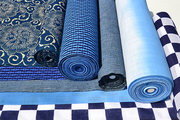
Chusen is a dyeing technique to pour dye onto the fabric. By pouring dye onto layers of fabric from the top and bottom, both sides of the fabric are dyed beautifully so that there is no difference between the back side and front side. Fabrics dyed…
View more
-
Tokyo Plain Dyeing Tokyo mujizome
- Dyed textiles
- Tokyo
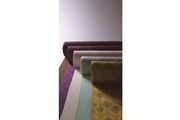
Tokyo Plain Dyeing, called Tokyo Mujizome in Japanese, is a plain dyed textile that started in the mid-Edo period by dyeing artisans as plain dyeing of Edo Murasaki(Edo Purple), indigo, safflower and Edo Cha(Edo Brown). The current main productio…
View more
