


Dyed textiles and more
- Sort by
- Popularity
- Name
-
Osaka naniwa pewterware Osaka naniwa suzuki
- Metal works
- Osaka

Osaka naniwa pewterware (called Osaka naniwa suzuki in Japanese) is a metalwork produced in and around the city of Osaka, Osaka prefecture. In the past, tin mined in Japan was used, but today it is imported mainly from Thailand and Indonesia. This…
View more
-
Tosa cutlery Tosa uchihamono
- Metal works
- Kochi
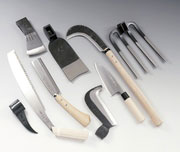
Tosa cutlery (called Tosa uchihamono in Japanese) are hammer-forged blades produced in the eastern to central part of Kochi prefecture, including the town of Ino and the cities of Kami, Nankoku, Tosa, and Susaki. Kochi prefecture was once a provin…
View more
-
Naruko lacquerware Naruko shikki
- Lacquerware
- Miyagi
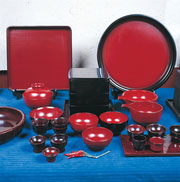
Naruko lacquerware (called Naruko shikki in Japanese) is a form of lacquerware produced around the city of Osaki, Miyagi prefecture. Lacquerware is a craft coating layers of lacquer on wooden tableware and other utensils. Lacquerware is produced i…
View more
-
Niigata lacquerware Niigata shikki
- Lacquerware
- Niigata
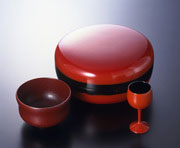
Niigata Lacquerware (called Niigata Shikki in Japanese) is a form of lacquerware produced in the area around the city of Niigata, Niigata prefecture. This craft has various coating techniques such as hana-nuri, ishime-nuri, nishiki-nuri, isokusa-n…
View more
-
Kyo-komon textiles Kyo komon
- Dyed textiles
- Kyoto
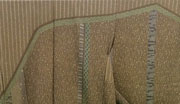
Kyo Komon are fine-patterned textiles produced in Kyoto prefecture. Kyoto, a historical center of dyed textiles, is renowned for its superb fabrics resulting from exceptional dyeing and stencil making. This craft has beautifully elegant colored pa…
View more
-
Murakami carved lacquerware Murakami kibori tsuishu
- Lacquerware
- Niigata
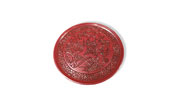
Murakami Carved Lacquerware (called Murakami Kibori Tsuishu in Japanese) is produced in the area around Murakami, Niigata prefecture. The region, which was formerly the Murakami domain, has been famous for its production of natural lacquer since t…
View more
-
Tsubame-tsuiki copperware Tsubame tsuiki doki
- Metal works
- Niigata
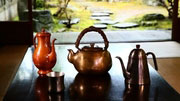
Tsubame-tsuiki Copperware (called Tsubame Tsuiki Douki in Japanese) is a type of metalware made on the outskirts of Tsubame, Niigata prefecture. Since the middle of the Edo period (1603-1868), kettles and other crafts have been produced from coppe…
View more
-
Arimatsu tie-dyeing Arimatsu narumi shibori
- Dyed textiles
- Aichi
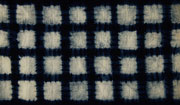
Arimatsu Narumi Shibori is a tie-dye fabric produced in the area surrounding Nagoya, Aichi prefecture. Many of the tie-dye products in Japan are produced here. The tie-dye products are designated as a traditional national craft. Arimatsu Narumi Sh…
View more
-
Ryukyu traditional textiles Ryukyu bingata
- Dyed textiles
- Okinawa
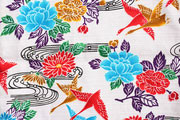
Ryukyu Bingata is a dyed and woven textile produced around Shuri, Okinawa prefecture. Its origin goes back to the 14th to 15th century. The ladies of the royal family or the families of the warrior class wore Ryukyu Bingata. There are two kinds of…
View more
-
Shinshu Forged Blades Shinshu uchihamono
- Metal works
- Nagano
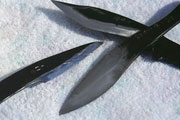
Shinshu Forged Blades or Shinshu Uchihamono in Japanese, are metalworks produced around Nagano, Nagano prefecture. As this area was formerly a province called Shinano which was also called Shinshu, these blades are known under the name of "Sh…
View more
-
Banshu-miki cutlery Banshu miki uchihamono
- Metal works
- Hyogo
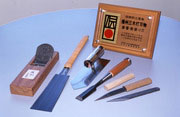
Banshu Miki Uchihamono are metalwork produced around Miki City, Hyogo Prefecture. Like Shinshu Uchihamono and Tosa Uchihamono, Banshu Miki Uchihamono is renowned as a craft made using molding techniques. These areas are also known as large product…
View more
-
Higo inlays Higo zogan
- Metal works
- Kumamoto
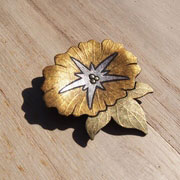
Higo Zogan is inlaid metal work produced in Kumamoto, Kumamoto prefecture. This craft was formerly used to adorn the gun barrels or sword guards of samurai. Today, however, the skills are used to make personal accessories or interior ornaments. Th…
View more
-
Echigo-sanjo cutlery Echigo sanjo uchihamono
- Metal works
- Niigata
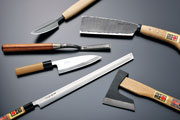
Echigo-Sanjo Uchihamono are hammer-forged blades produced in Sanjo City, Niigata prefecture. Unlike modern blades made using the stamp pressing and polishing techniques developed after the second world war, these blades are produced by hand-hammer…
View more
-
Tokyo textiles Tokyo tegaki yuzen
- Dyed textiles
- Tokyo

Tokyo Tegaki Yuzen are kimono textiles produced in Shinjuku Ward, Nerima Ward and Nakano Ward, Tokyo. Having been produced in the townsmen culture of Edo (current Tokyo), a refined stylishness is expressed in its soft, subdued colors. Unlike other…
View more
-
Kyo dyed textiles Kyo kanoko shibori
- Dyed textiles
- Kyoto
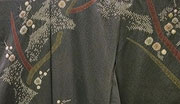
Kyo Kanoko Shibori is a dyed textile produced in Kyoto Prefecture. Shibori is one of the tie-dye techniques that create patterns by tying the textile before dyeing so that the tied parts remain white. This particular Shibori resembles fawn spots a…
View more
-
Nagoya kimono-dyeing Nagoya kuromontsuki zome
- Dyed textiles
- Aichi
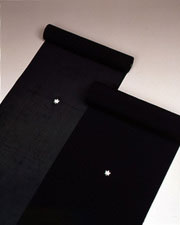
Nagoya Kuromontsuki Zome is a dyed and woven textile produced in the region surrounding Nagoya City, Aichi Prefecture. Kuromontsuki is a kimono worn at weddings or funerals and it has been popular since the Edo period (1603 - 1868) in Nagoya among…
View more
-
Echigo-yoita cutlery Echigo yoita uchihamono
- Metal works
- Niigata
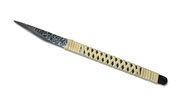
Echigo Yoita Uchihamono are blades produced for a variety of tools in the Yoita area of Nagaoka City, Niigata Prefecture. They are smith forged, meaning red-hot metal is beaten to shape, and are distinguished by their refined sharp cutting edge an…
View more
-
Kyo kimono-dyeing Kyo kuromontsuki zome
- Dyed textiles
- Kyoto
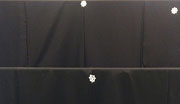
Kyo Kuromontsuki Zome is a dyed fabric produced in the areas including Kyoto city and Kameoka city in Kyoto prefecture. The characteristic of Kyo Kuromontsuki Zome is its high quality and graceful black color. The kimonos that are worn for funeral…
View more
-
Chiba Artisan Tools Chiba Koshogu
- Metal works
- Chiba
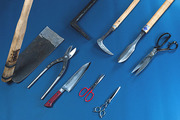
Chiba Artisan Tools are cutlery and hand tools made in the Boso Peninsula of Chiba prefecture, using traditional techniques. Their main products are sickles, hoes, knives and western style scissors. As iron sand was mined in the Boso Peninsula fr…
View more
-
Naniwa Honzome Hand Dyeing Naniwa honzome
- Dyed textiles
- Osaka
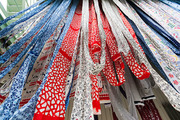
Naniwa Honzome Hand Dyeing is a traditional Japanese dyeing method, of which products are mainly produced in Sakai and Kashiwara, Osaka Prefecture. Osaka was a large producing center of Japanese hand towels called tenugui since the Edo period (160…
View more
-
Tokyo Honzome Chusen Tokyo Honzome Chusen
- Dyed textiles
- Tokyo
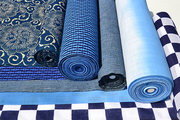
Chusen is a dyeing technique to pour dye onto the fabric. By pouring dye onto layers of fabric from the top and bottom, both sides of the fabric are dyed beautifully so that there is no difference between the back side and front side. Fabrics dyed…
View more
-
Tokyo Plain Dyeing Tokyo mujizome
- Dyed textiles
- Tokyo
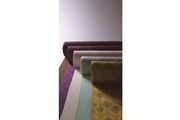
Tokyo Plain Dyeing, called Tokyo Mujizome in Japanese, is a plain dyed textile that started in the mid-Edo period by dyeing artisans as plain dyeing of Edo Murasaki(Edo Purple), indigo, safflower and Edo Cha(Edo Brown). The current main productio…
View more
-
Tokyo antimony craft Tokyo antimony kogeihin
- Metal works
- Tokyo
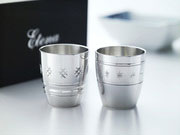
Tokyo Antimony Craft is metalwork produced in the area from the northeast of Tokyo through to Abiko City in Chiba prefecture. Antimony is an alloy, which easily takes impressions, has a smooth surface and does not shrink during cooling after casti…
View more
