


- Metal works
- Yamagata
Yamagata Cast Iron Yamagata Imono
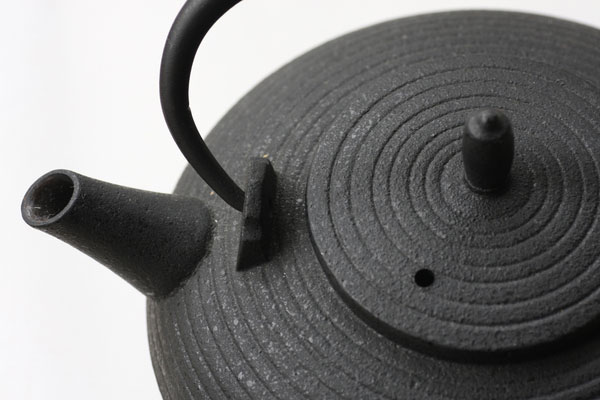
Yamagata Imono is known for combining the substantial presence of cast metal with thin, finely textured surfaces and precise forms. Traditional techniques such as mold turning, pattern pressing, and surface finishing create refined expressions in tea kettles, iron teapots, vases, and other cast-metal works. It was designated a Traditional Craft by the Japanese government in 1975.
Description
What is Yamagata Cast Iron ?
Yamagata Imono is a traditional metal-casting craft produced in Yamagata City, Yamagata Prefecture. On February 17, 1975, it was designated as a Traditional Craft by the Japanese government.
The local casting industry includes both craft castings, such as iron kettles, tea ceremony kettles, cookware, and decorative objects, and industrial castings, including machine and engineering components.
One of the defining characteristics of Yamagata Imono is the combination of the substantial presence of cast metal with relatively thin walls and a fine, delicate surface texture.
Traditional molding techniques include hiki-gata, a form of rotational sand-mold shaping, and kome-gata, in which the mold is formed by packing sand around a pattern. Decorative techniques such as monyo-oshi, in which patterns are pressed into the mold, and hada-uchi, which creates a finely textured surface, are also characteristic.
Under the nationally designated traditional techniques, mane, a fine molding material, is used for the surface of the mold that comes into contact with molten metal. The mold is then fired or dried before casting.
Ironware is traditionally colored using lacquer and iron-based coloring solutions, while copper-alloy pieces may be finished with copper sulfate, verdigris, or iron-based coloring agents. Cooking utensils made of iron may also undergo a kanakedome treatment to stabilize the interior surface.
Traditional raw materials include iron sand or foundry pig iron for ironware and copper alloys for copperware.
Today, Yamagata remains distinctive as a production center where traditional craft casting and modern industrial casting continue to coexist.
History

One traditional account traces the origins of Yamagata Imono to the late Heian period.
According to local tradition, metal casters accompanying the warrior Minamoto no Yoriyoshi discovered that the sand of the Mamigasaki River and the surrounding soil were well suited to mold making, and some are said to have remained in the area.
Documentary evidence is later. Official materials for the nationally designated craft state that records of metal casting in Yamagata date from the late fourteenth century and that a recognizable production center had formed by the end of the sixteenth century.
The industry developed more fully from the late Sengoku period into the early Edo period. Mogami Yoshiaki, lord of Yamagata Castle, reorganized the castle town and brought craftspeople together in specialized districts. Areas that became known as Domachi and Kajimachi helped establish the foundation of Yamagata’s metalworking industry.
During the Edo period, craftspeople produced everyday utensils, Buddhist objects, and implements for temples and shrines. The popularity of pilgrimages to the Dewa Sanzan mountains also helped distribute Yamagata cast products to visitors from across Japan.
As casting techniques advanced, larger objects such as temple bells and lanterns became possible. Fine craft castings such as tea ceremony kettles and iron kettles also developed, requiring increasingly precise molds and carefully finished surfaces.
From the Meiji period onward, industrialization created demand for machinery and engineering castings. During the Taisho and Showa periods, industrial casting expanded alongside traditional craft production.
In 1973, an industrial casting district was established in western Yamagata City, and many foundries relocated there.
On February 17, 1975, Yamagata Imono was designated as a Traditional Craft by the Japanese government.
Today, traditional techniques such as hiki-gata, kome-gata, monyo-oshi, and hada-uchi continue to be used in the production of Yamagata craft castings.
Production Process
- Step 1: Designing and Preparing the Pattern
The form, size, and intended use of the casting are determined, and patterns, templates, or models are prepared based on the design.
Because the casting method varies depending on whether the object is a tea ceremony kettle, iron kettle, flower vessel, decorative object, or cooking utensil, factors such as wall thickness, decoration, and hollow sections are carefully considered.
For hiki-gata molding, a template is prepared to shape the mold while rotating around a central axis. For kome-gata molding, a wooden or similar pattern is used, while lost-wax casting begins with a model formed in wax. - Step 2: Making the Mold
The mold is made from casting sand.
Nationally designated traditional methods used in Yamagata Imono include hiki-gata and kome-gata molding, with the latter also including lost-wax techniques.
In hiki-gata molding, a template is rotated around a central axis to shape the sand mold, making it particularly suitable for circular objects such as tea ceremony kettles and iron kettles. In kome-gata molding, casting sand is packed around a pattern to reproduce its form.
A fine molding material known as mane is applied to the surface of the mold that will come into contact with the molten metal. The precision of the mold directly affects both the form and surface quality of the finished casting. - 3: Applying Patterns and Creating the Surface Texture
Decorative patterns and surface textures are added to the mold according to the type of object being made.
In monyo-oshi, patterned tools or stamps are pressed into the mold to create decorative motifs such as arare, or hailstone patterns.
Hada-uchi is used to refine the mold surface and produce the fine cast texture characteristic of Yamagata Imono.
For objects such as iron kettles and tea ceremony kettles, areas for attaching fittings such as ring mounts may also be prepared at this stage. - 4: Making the Core and Drying or Firing the Mold
For hollow objects such as iron kettles and tea ceremony kettles, an inner core is made to form the interior cavity.
The core is shaped precisely so that a consistent gap remains between it and the outer mold. This space determines the wall thickness of the finished casting.
Both the outer mold and the core are thoroughly dried and, when necessary, fired. Removing moisture from the mold helps prevent defects during pouring and ensures stable casting.
The outer mold and core are then carefully assembled, and the pouring channels and gates for the molten metal are prepared. - 5: Melting and Pouring the Metal
Appropriate metal is selected according to the product. Traditional ironware uses iron sand or foundry pig iron, while copperware is made from copper alloys.
The metal is melted in a furnace and prepared for casting while impurities are removed.
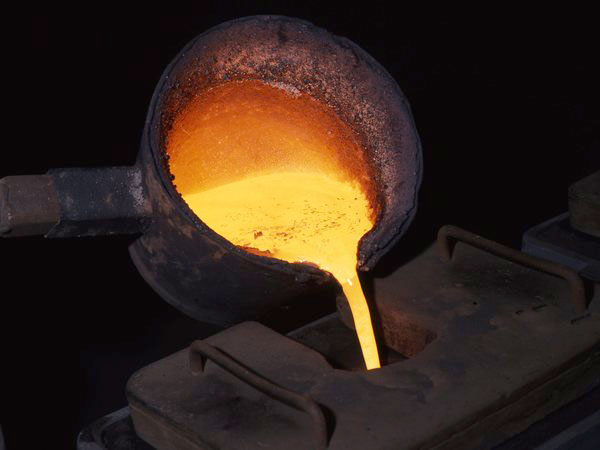
Once fully molten, the metal is transferred to a ladle and carefully poured into the mold through the pouring gate. This process is known as casting or pouring.
The artisan carefully controls the condition and flow of the molten metal so that it reaches every part of the mold. - 6: Breaking the Mold and Removing the Sand
After the molten metal has fully solidified, the mold is broken open and the casting is removed.
This process is known as mold breaking. Casting sand adhering to the exterior and interior surfaces is then carefully removed.
For hollow objects, the inner core is also taken out.
At this stage, the casting is inspected for major defects such as cracks, missing sections, or incomplete filling. - Step 7: Trimming, Polishing, and Finishing
After removal from the mold, the casting still has unwanted sections such as gates, runners, and casting flash.
These are cut away, and the shape is refined using hammers, chisels, files, and other finishing tools.
Minor irregularities on the surface are carefully corrected without damaging the decorative patterns or characteristic cast texture.
For iron kettles and tea ceremony kettles, the fit of components such as lids and handles is also checked and adjusted as necessary. - Step 8: Coloring and Kanakedome Treatment
Finally, the surface is finished according to the material and intended use of the product.
Ironware is traditionally colored using materials such as lacquer and iron-based coloring solutions. Depending on the object, lacquer may be applied while the surface is heated to develop the desired tone and texture.
Copperware may be colored using substances such as copper sulfate, verdigris, or iron-based coloring agents to produce distinctive surface tones.
Iron cooking utensils may also undergo a traditional kanakedome treatment. This process forms a protective oxide layer through heating or similar treatment and helps reduce the characteristic metallic taste or odor associated with untreated iron.
The color, surface condition, shape, and function are then inspected before the Yamagata Imono piece is completed.
Facility Information
Gutto Yamagata
-
Address
-
Tel.+81-23-688-5500
-
ClosedJanuary 1
-
Business Hours9am to 5:30pm
-
Website
Yamagata Cast Iron Related Artists
- You will be redirected to the artist's page on the Gallery Japan website
See list of artworks related to Yamagata Cast Iron 
Other Metal works
- Nambu Ironware
- Takaoka Copperware
- Yamagata Cast Iron
- Sakai Forged Blades
- Tokyo Silverwork
- Echizen Forged Blades
- Osaka Naniwa Pewterware
- Tosa Forged Blades
- Tsubame Hand-Hammered Copperware
- Shinshu Forged Blades
- Banshu Miki Forged Blades
- Higo Inlays
- Echigo Sanjo Forged Blades
- Echigo Yoita Forged Blades
- Chiba Artisan Tools
- Tokyo Antimony Crafts