


Woven textiles and more
- Sort by
- Popularity
- Name
-
Hon-shiozawa silk Hon shiozawa
- Woven textiles
- Niigata
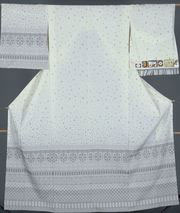
Hon-shiozawa is a textile produced in the former town of Shiozawa (now a part of the city of Minamiuonuma), Niigata prefecture. It is one of the textiles that represent the region, which is famous for linen and silk textile production. This craft …
View more
-
Kishu bamboo fishing rods Kishu herazao
- Wood, bamboo crafts
- Wakayama
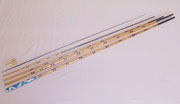
Kishu bamboo fishing rods (called Kishu herazao in Japanese) are produced in the city of Hashimoto, Wakayama prefecture for catching Japanese crucian carp. The bamboos: suzutake, madake, and yadake are cut, left to dry for several years, and only …
View more
-
Nagoya textiles Nagoya yuzen
- Dyed textiles
- Aichi
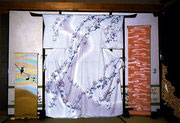
Nagoya yuzen is a cloth that is dyed and painted through a range of traditional techniques that are unique to the city of Nagoya, Aichi prefecture. The designs used for this craft range from monochromatic, color gradation, or classical motifs, but…
View more
-
Oitama tsumugi silk Oitama tsumugi
- Woven textiles
- Yamagata
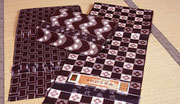
Oitama tsumugi is a silk fabric produced in the Yonezawa, Hakutaka and Nagai regions of Oitama in southern Yamagata prefecture. The area was well-known for producing and exporting ramie, a tall plant of the nettle family that has been used to make…
View more
-
Ojiya tsumugi silk Ojiya tsumugi
- Woven textiles
- Niigata
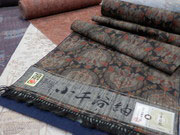
Ojiya tsumugi is a silk fabric produced in the area around Ojiya, Niigata prefecture, which is a city known for heavy snow. Echigo jofu, a textile made of ramie, has been produced in this area for over a thousand years. As new weaving techniques …
View more
-
Yaeyama cotton cloth Yaeyama minsa
- Woven textiles
- Okinawa
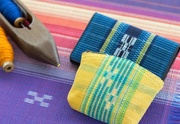
Yaeyama minsa is a fabric produced in the town of Taketomi, Yaeyama district and the city of Ishigaki, Okinawa prefecture. The origin of this craft is not clear but it is thought that the kasuri belt was brought to Okinawa from Afghanistan via Chi…
View more
-
Yaeyama ramie cloth Yaeyama jofu
- Woven textiles
- Okinawa
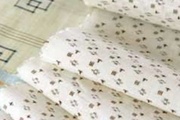
Yaeyama jofu is a fabric produced in the area surrounding Yaeyama ward in Ishigaki city, Okinawa prefecture. This textile is woven with hand-spun ramie threads and used to be produced as a tax to the Ryukyu Kingdom (present day Okinawa) in ancient…
View more
-
Honba oshima tsumugi silk Honba oshima tsumugi
- Woven textiles
- Kagoshima
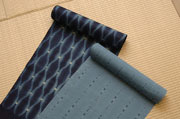
Honba Oshima Tsumugi is a fabric made on the island of Amami, Kagoshima prefecture. It is one hundred percent plain silk that has been dyed and made on handlooms like shime-bata or te-bata. This textile has deep, muted tones as it is dyed with ye…
View more
-
Shinshu tsumugi silk Shinshu tsumugi
- Woven textiles
- Nagano
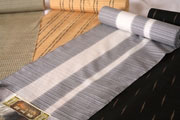
Shinshu tsumugi is a type of silk fabric also known as pongee and produced throughout Nagano prefecture. Each region in the prefecture has their own production styles and techniques. Also, the specific name of this fabric differs depending on the …
View more
-
Shuri brocade Shuri ori
- Woven textiles
- Okinawa

Shuri brocade (called Shuri ori in Japanese) is a woven fabric produced on the main island of Okinawa. There are two types of fabric, kasuri orimono and mon orimono, and these include hanaui, hanakura ori, doton ori, kasuri and minsa. The Ryukyu …
View more
-
Tama brocade Tama ori
- Woven textiles
- Tokyo
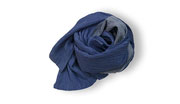
Tama brocade (called Tama ori in Japanese) is a woven silk fabric produced around Hachioji, Tokyo. Since ancient times, Tama ori has been well-known under the name of Hachioji woven fabric. The following five different types of woven fabric are …
View more
-
Yomitanzan-hanaori textiles Yomitanzan hanaori
- Woven textiles
- Okinawa
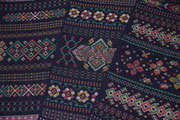
Yomitanzan hanaori is a textile produced in the village of Yomitan, Okinawa. The threads of this craft are first dyed before being woven in a geometric, flowerlike design. This craft is woven with silk or cotton threads dyed with plant-based dyes …
View more
-
Kamo traditional chest Kamo kiri tansu
- Wood, bamboo crafts
- Niigata
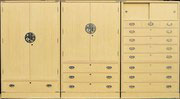
Kamo Kiri Tansu are chests of drawers made of paulownia wood that are produced in and around the city of Kamo, Niigata prefecture. Today, a majority of all paulownia chests made in Japan are produced in Kamo. This craft can keep clothes safe from …
View more
-
Kyo wood joinery Kyo sashimono
- Wood, bamboo crafts
- Kyoto

Kyo Sashimono is a kind of wood joinery produced in the prefecture of Kyoto. Sashimono is a collective name for furniture and furnishings assembled with wood joints that originates from the process of measuring with a monosashi or woodwork ruler. …
View more
-
Kyo-komon textiles Kyo komon
- Dyed textiles
- Kyoto
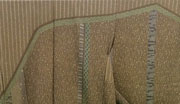
Kyo Komon are fine-patterned textiles produced in Kyoto prefecture. Kyoto, a historical center of dyed textiles, is renowned for its superb fabrics resulting from exceptional dyeing and stencil making. This craft has beautifully elegant colored pa…
View more
-
Miyakonojo archery bows Miyakonojo daikyu
- Wood, bamboo crafts
- Miyazaki
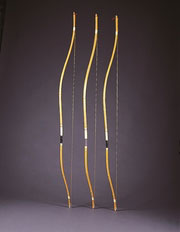
Miyakonojo Bows (called Miyakonojo Daikyu in Japanese) are bamboo archery bows produced in Miyakonojo, Miyazaki prefecture. The Miyakonojo area is known for growing high quality bamboo and has produced a variety of weapons like wooden swords as w…
View more
-
Osaka carved wooden panel Osaka ranma
- Wood, bamboo crafts
- Osaka
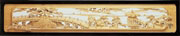
Osaka Transoms (called Osaka Ranma in Japanese) are transoms produced in and around the cities of Osaka, Kishiwada, and Suita in Osaka prefecture. In a Japanese-style house, transoms are wooden panels attached between the ceilings and lintels of t…
View more
-
Isesaki traditional resist-dyed textiles Isesaki kasuri
- Woven textiles
- Gunma
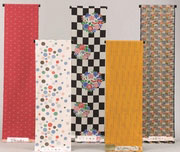
Isesaki Kasuri is a type of woven fabric produced in Isesaki, Gunma prefecture. Mainly used for kimono, this fabric has been admired for its texture since ancient times. Today, neckties and shop curtains called noren in Japanese are also produced.…
View more
-
Miyajima woodwork Miyajima zaiku
- Wood, bamboo crafts
- Hiroshima
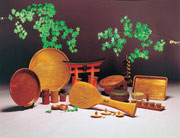
Miyajima Woodwork (called Miyajima zaiku in Japanese) are woodwork products made in Miyajima, Hatsukaichi, Hiroshima prefecture. Miyajima Island, one of the Three Views of Japan*, has long been nicknamed the "Island of Gods", while Hatsu…
View more
-
Nibutani carved wooden tray Nibutani ita
- Wood, bamboo crafts
- Hokkaido
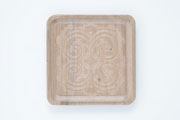
Nibutani Carved Wooden Trays (called Nibutani ita in Japanese) are produced in Biratori, Hokkaido. The origin of the town name, is an Ainu language word for cliff, pirauturu. This craft is known for its patterns like a spiral pattern called moreun…
View more
-
Arimatsu tie-dyeing Arimatsu narumi shibori
- Dyed textiles
- Aichi
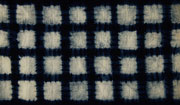
Arimatsu Narumi Shibori is a tie-dye fabric produced in the area surrounding Nagoya, Aichi prefecture. Many of the tie-dye products in Japan are produced here. The tie-dye products are designated as a traditional national craft. Arimatsu Narumi Sh…
View more
-
Hachio island silk Honba kihachijo
- Woven textiles
- Tokyo
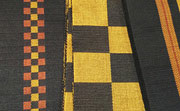
Honba Island Silk (called Honba Kihachijo in Japanese) is produced on Hachijojima Island in Tokyo. The name of this craft derives from a silk fabric with stripe and check patterns mainly dyed in bright yellow called kihachi. Patterns mainly dyed i…
View more
-
Nibutani bark cloth Nibutani attoushi
- Woven textiles
- Hokkaido
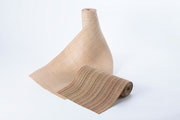
Nibutani Bark Cloth (called Nibutani-attushi in Japanese) is a bark fiber fabric produced in the region surrounding the the town of Biratori, Hokkaido. The term Nibutani originates from niputai which is an Ainu (indigenous people of north Japan) l…
View more
-
Okuaizu Basketry Oku aizu amikumi zaiku
- Wood, bamboo crafts
- Fukushima
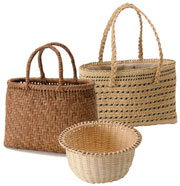
Okuaizu Basketry, called Okuaizu Amikumi Zaiku in Japanese, is basketry produced around Mishima Town, Onuma County, Fukushima Prefecture. As this mountainous area in the Okuaizu region has much snow and farmers are unable to work in the fields in …
View more
-
Ryukyu traditional textiles Ryukyu bingata
- Dyed textiles
- Okinawa
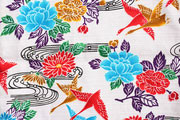
Ryukyu Bingata is a dyed and woven textile produced around Shuri, Okinawa prefecture. Its origin goes back to the 14th to 15th century. The ladies of the royal family or the families of the warrior class wore Ryukyu Bingata. There are two kinds of…
View more
-
Uetsu tilia bark cloth Uetsu shinafu
- Woven textiles
- Yamagata
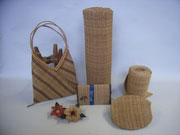
Uetsu Shinafu is a textile produced in the area of Sekikawa, Tsuruoka, Yamagata prefecture, and Sanpoku, Murakami, Niigata prefecture. The names of the neighboring prefectures of Yamagata (Uzen) and Niigata (Echigo) are combined and called Uetsu, …
View more
-
Echizen traditional chest Echizen tansu
- Wood, bamboo crafts
- Fukui
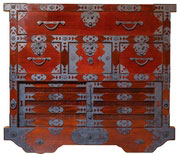
Echizen Tansu are lacquer coated chests of drawers made around Echizen City and Sabae City of Fukui Prefecture. They are mainly made of Japanese zelkova and paulownia, and decorated with iron fittings and lacquer. Japanese zelkova is a hard wood w…
View more
-
Kasukabe traditional paulownia chest Kasukabe kiri tansu
- Wood, bamboo crafts
- Saitama
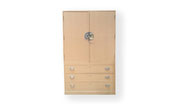
Kasukabe traditional paulownia chests, called Kasukabe Kiri-tansu in Japanese, are traditional woodwork made around Saitama City and Kasukabe City, Saitama Prefecture. Kasukabe Kiri-tansu are distinguished by their simple design based on the strai…
View more
-
Katsuyama bamboo crafts Katsuyama take zaiku
- Wood, bamboo crafts
- Okayama
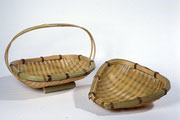
Katsuyama Take Zaiku are bamboo baskets produced in Maniwa City, Okayama Prefecture. Bamboo ware products are made in many areas across Japan from a variety of bamboos such as thick stemmed bamboo and black bamboo. However, Japanese timber bamboo …
View more
-
Osaka karaki wood joinery Osaka karaki sashimono
- Wood, bamboo crafts
- Osaka
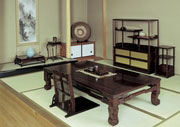
Osaka Karaki Wood Joinery, called Osaka Karaki Sashimono in Japanese, are wooden articles manufactured in several cities of Osaka Prefecture. Karaki is wood from trees mainly grown in Southeast Asia, and include rosewood, ebony, Chinese quince, an…
View more
