


- Other crafts
- Tokyo
Edo Glass Edo Garasu
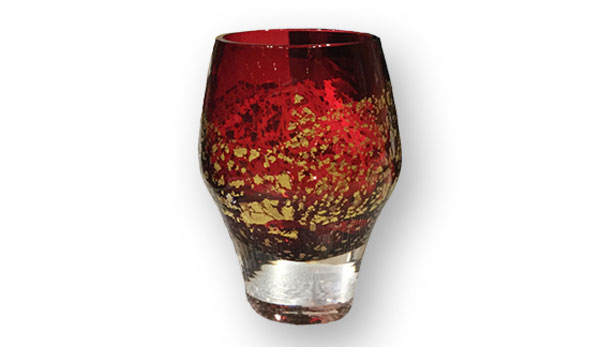
Edo Glass is shaped by skilled artisans using traditional hand-forming techniques such as free-blowing and mold-blowing. Its appeal lies in its clarity, subtle variations, and the warmth created by handcrafting, giving each piece a unique character. It was designated a Traditional Craft by the Japanese government in 2014.
Description
What is Edo Glass ?
Edo Glass is a traditional glassmaking craft produced mainly in Sumida, Koto, and Edogawa wards and other parts of Tokyo. It was designated as a Traditional Craft of Tokyo in 2002 and as a Traditional Craft by the Japanese government on November 26, 2014.
Its defining characteristic is the hand forming of molten glass by skilled craftspeople.
The nationally designated traditional techniques include free-blowing, mold-blowing, and press molding.
In free-blowing, molten glass is gathered onto the end of a blowpipe and shaped in the air while the artisan rotates the pipe, blows into it, and uses tools such as jacks and paddles to refine the form. When the glass begins to cool and harden, it is reheated and the shaping process is repeated.
In mold-blowing, the softened glass is placed inside a wooden or metal mold and inflated so that it expands against the mold surface. Even when the same mold is used, subtle differences in temperature, the amount of glass, and the artisan's technique give each piece its own character.
Press molding uses matched male and female molds to press hot glass into shape.
Traditional raw materials have included silica sand, soda ash, lime, potash, and lead oxide. These are combined according to the intended type of glass and melted at high temperatures before forming.
Edo Glass includes a wide variety of products such as tumblers, wine glasses, sake vessels, bowls, plates, and flower vases. Tokyo glassmakers have also developed a strong tradition of producing many different designs in relatively small quantities.
The glassmaking skills developed in Edo and later modernized in Tokyo continue to be practiced by craftspeople today.
History
Glass objects were already being made in Japan during the Yayoi period, although domestic production later declined for a long period.
From the sixteenth to the seventeenth centuries, new glassmaking techniques reached Japan through contacts with China, Portugal, the Netherlands, and other regions, leading to a revival of glass production.
Glassmaking in Edo is generally considered to have begun in the early eighteenth century. Kagaya Kyubei produced items such as mirrors and eyeglasses in Nihonbashi, while Kazusaya Tomesaburo is traditionally associated with products such as ornamental hairpins and wind chimes in Asakusa.
As Edo grew into a major center of population and consumption, glass was increasingly used for everyday vessels and decorative objects.
By the later Edo period, production had expanded beyond tableware and bottles to include scientific instruments such as thermometers and hydrometers.
During the Meiji period, modern European glassmaking technology was introduced into Japan. A government-operated glassworks in Shinagawa played an important role in introducing new production methods and equipment to Tokyo.
The catalog of the First National Industrial Exhibition in 1877 records works by Kagaya Kyubei and Kumasaki Yasutaro.
In 1879, the Tokyo Hari Manufacturing Association was established, helping organize glass producers in the city.
Tokyo's glass industry subsequently developed a strong tradition of hand production and small-lot manufacturing alongside the spread of mechanized mass production.
Edo Glass was designated as a Traditional Craft of Tokyo in 2002 and as a Traditional Craft by the Japanese government on November 26, 2014.
Today, artisans continue to use traditional techniques including free-blowing, mold-blowing, and press molding to produce a wide range of glassware.
Production Process
- 1. Mixing and Melting the Raw Materials
Raw materials such as silica sand, soda ash, and lime are blended according to the type and intended use of the glass.
The mixture is placed in a melting furnace and heated at a high temperature until it becomes a uniform molten glass.
Once fully melted, the glass is maintained at a workable temperature for the forming process.
When colored glass is required, metallic oxides or other coloring agents may be added to create the desired hue. - 2. Gathering the Molten Glass
The tip of a blowpipe is inserted into the molten glass, and the pipe is rotated to gather the required amount. This process is known as gathering.
For larger objects, glass may be gathered several times, with each layer shaped and reheated before additional molten glass is added.
The artisan carefully judges both the amount and temperature of the glass, as these greatly affect the size, thickness, and balance of the finished piece. - 3. Forming the Initial Bubble
The gathered molten glass is shaped into a compact mass, and air is blown through the blowpipe to create a small hollow bubble.
This initial bubble forms the basis of the finished vessel and is gradually enlarged through repeated blowing and reheating.
The blowpipe is continuously rotated so that the soft glass does not sag in one direction, helping maintain an even wall thickness and balanced form. - 4. Free-Blowing, Mold-Blowing, and Press Molding
Depending on the type of product, Edo Glass is formed using traditional techniques such as free-blowing, mold-blowing, or press molding.
In free-blowing, no mold is used. The artisan rotates the blowpipe while blowing air into the glass and shapes it in the air with tools such as jacks and paddles.
In mold-blowing, the softened glass is placed inside a wooden or metal mold and inflated so that it expands against the inner surface of the mold.
In press molding, hot glass is placed in a mold and pressed into shape between matched male and female molds. - 5. Attaching the Pontil and Finishing the Rim
For vessels with an open rim, such as tumblers and bowls, a second rod called a pontil is attached to the base of the piece.
The object is then separated from the blowpipe, and the open rim is reheated until soft enough to shape.
Using hand tools, the artisan adjusts the diameter, thickness, and profile of the rim according to the intended use of the vessel. - 6. Reheating and Final Shaping
Glass quickly becomes rigid as it cools, so it is repeatedly returned to the reheating furnace during forming.
While maintaining the appropriate softness, the artisan rotates the blowpipe or pontil and checks the overall shape, wall thickness, stability of the base, and symmetry of the piece.
Any final shaping or decorative details are also completed at this stage as required. - 7. Annealing
Once forming is complete, the glass is placed in an annealing kiln and cooled gradually.
If hot glass is cooled too quickly, differences in temperature between the surface and interior can create internal stress and lead to cracking or breakage.
Controlled cooling relieves this stress and stabilizes the finished piece. - 8. Finishing and Inspection
After annealing, each piece is inspected for its shape, dimensions, rim, base, and surface condition.
When necessary, marks left by the blowpipe or pontil are ground or polished to ensure a stable and usable finish.
The finished glass is then checked for cracks, scratches, distortion, and other surface conditions. Small bubbles or subtle variations in form are evaluated according to the standards and design of each product.
Because each piece is formed by hand, even objects made to the same design may show slight individual differences, giving Edo Glass its characteristic handcrafted appearance.
Other Other crafts
- Edo Kiriko Cut Glass
- Koshu Lacquered Deer Leather
- Kyo Folding Fans
- Marugame Fans
- Boshu Fans
- Gifu Lanterns
- Yamaga Lanterns
- Kyo Fans
- Tendo Japanese Chess Pieces
- Edo Glass
- Edo Patterned Paper
- Yame Lanterns
- Owari Cloisonné
- Fukuyama Koto (Japanese Harps)
- Kyo Art Mountings
- Banshu Fishing Flies
- Edo Woodblock Prints
- Koshu Hand-carved Seals
- Edo Hyogu (Art Mountings)
- Edo Tortoiseshell Crafts
- Etchu Fukuoka Sedge Hats
- Izumi Glass
- Nagasaki Tortoiseshell Crafts
- Sanshin
- Tokyo Hand-carved Seals
- Tokyo Koto (Japanese Harp)
- Tokyo Shamisen
Other Crafts Made in Tokyo
- Edo Kiriko Cut Glass
- Edo Wood Joinery
- Edo Glass
- Murayama Oshima Tsumugi Textiles
- Tokyo Silverwork
- Edo Patterned Paper
- Tokyo Fine Pattern Dyed Textiles
- Edo Bamboo Fishing Rods
- Tama Textiles
- Honba Kihachijo Fabric
- Edo Woodblock Prints
- Tokyo Yuzen Textiles
- Edo Seasonal Festival Dolls
- Edo Hyogu (Art Mountings)
- Edo Oshi-e Embossed Fabric Pictures
- Edo Tortoiseshell Crafts
- Tokyo Antimony Crafts
- Tokyo Hand-carved Seals
- Tokyo Honzome Chusen
- Tokyo Koto (Japanese Harp)
- Tokyo Plain Dyeing
- Tokyo Shamisen
