


 Photo:Okinawa Prefecture
- Woven textiles
- Okinawa
Shuri Textiles Shuri Ori
Versatile designs nurtured by the southern climate
Exquisite textile loved by the aristocracy of Okinawa
Description
What is Shuri Textiles ?
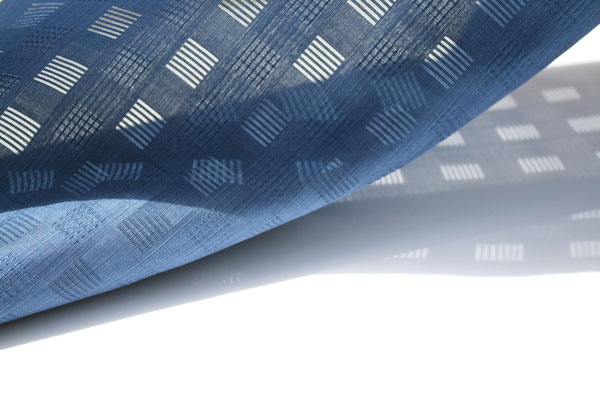
Shuri Textiles (called Shuri Ori in Japanese) is a woven fabric produced on the main island of Okinawa. There are two types of fabric, kasuri orimono and mon orimono, and these include hanaui, hanakura ori, doton ori, kasuri and minsa. The Ryukyu dynasty (current day Okinawa) was active in trade with China and Southeast Asia from the 14th to 15th century which brought in many weaving techniques. Shuri Textiles is woven with silk, cotton, hemp or banana fiber threads, and dyed with plant dyes including Ryukyu ai (indigo), fukugi tree, shibuki, tekachi and guru. This craft has a wide variety of textiles suitable for Okinawa's climate. Hanakura ori and doton ori, used to be woven only in Shuri (former capital of Ryukyu), and were designated as specific fabrics for the royal family and aristocrats. Hanakura ori is a yarn-dyed figured fabric mainly using solid colors such as yellow, blue and dark blue and gradations of color in its design. Doton ori, is abundant in color variations on an indigo base and was used for men's clothes in the Ryukyu dynasty period. Currently, it is used for kimono belts and accessories.
History
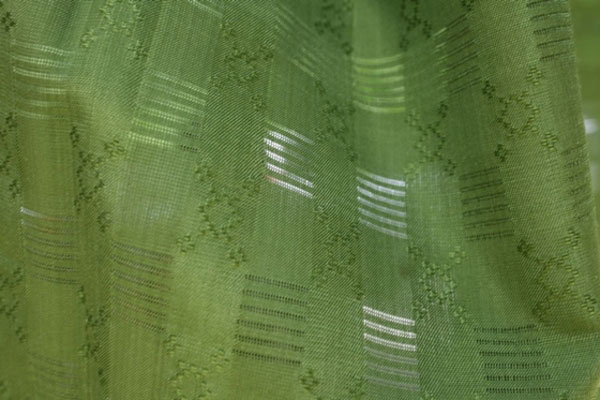 Photo:Okinawa Prefecture
The Ryukyu dynasty had flourishing trade with China and Southeast Asia between the 14th and 15th centuries when weaving techniques were introduced. The climate of Okinawa led artisans to develop original styles. In Shuri, the old capital of the Ryukyu dynasty, weaving techniques, colors, designs, elegance, and style were especially developed as a result of weaving cloth dedicated to the royal family and aristocrats. Shuri Textiles has been passed down for generations in the royal family and among upper-class women. The processes of Shuri Textiles are not divided but manufactured in one continuous process by hand, so the artisans are able to produce only a small amount but various types of fabric. In spite of losing everything during World War II, the long heritage of Shuri Textiles in Okinawa has been cherished up to today. Patterns that feature the nature and animals of Okinawa originate from their unique kasuri technique. Ryukyu kasuri is believed to be one of the roots of kasuri in Japan and has influenced other kasuri production regions.
Production Process
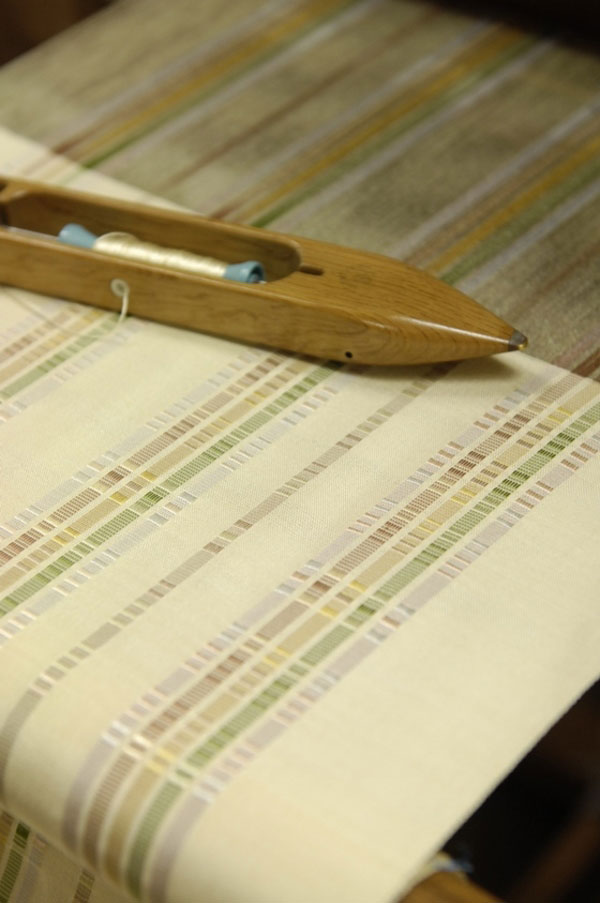 Photo:Okinawa Prefecture
- 1. Design
Various textiles woven in Okinawa such as hanakura ori, hanaui, doton ori and minsa are collectively called Shuri Textiles. The production process of kasuri spread and had influence throughout Japan. It is said that Shuri kasuri is precursor of kasuri because of its unique hand-wound technique.
The designs are based on a traditional design book that was edited by an artist for the royal family in Shuri. A traditional design pattern with a contemporary feel is chosen.
- 2. Thread winding
Itokuri or thread winding is done after removing impurities, boiling the threads in hot water to strengthen warps (parellel threads), sizing them, and starching them.
- 3. Warping
Warping is formatting the number and the length of threads to weave a bolt of cloth.
- 4. Warp tying
Warp tying (kasuri kukuri in Japanese) is a process of marking the vertical threads (warps) stretched according to the design and manually binding specific parts to avoid being dyed to make the kasuri. A special weaving loom is required to create a pattern featuring complicated, delicate patterns that are difficult to make manually. The number and the length of horizontal threads (wefts) depends on the design pattern. During this process, a loom wider than a bolt of cloth is used to set up the threads on a frame where the threads are marked according to the design, and then manually binded.
- 5. Dyeing
Shuri Textiles fabrics are mainly dyed with plants that are found in Okinawa, such as Ryukyu indigo, Yeddo hawthorn, and fukugi trees. The plant for Ryukyu indigo (Ryukyu ai) originated in Southeast Asian countries. Indigo plants have been believed from ancient times to be insect-repelling which is why it was used for clothing and daily use goods.
It takes a week in summer and two weeks in winter to make indigo dye. Dye production involves a process that adds water solubility to indigo leaves to make the solution which becomes dyeable when the flowers turn red. The threads are tied and immersed in the vat of dye and rubbed gently, letting the dye absorb. Then the threads are wrung, oxidized with air, and dried in direct sunlight. Dyeing requires patience because the same steps are repeated multiple times. Shuri Textiles has a golden color which is extracted from the bark of fukugi.
- 6. Preparation for weaving
The dyed threads are untied, aligned, and stretched on the loom according to the design pattern. The design sequence of kasuri threads is inserting kasuri threads, stripe threads and ground threads, temporary reeding, winding, heddle drawing, and reeding. Aligned weft threads are spooled around the tube which fits into the shuttle.
- 7. Weaving
Skilled artisans weave Shuri Textiles by hand using a wood loom called takahata. Even an experienced weaver will take a day to complete 30㎠ of fabric as this is a complicated process. The weft threads are set in a shuttle and meticulously woven according to the design. After weaving, the brocade is washed, stretched out to dry, and the fabric is complete.
Facility Information
TENBUSU NAHA
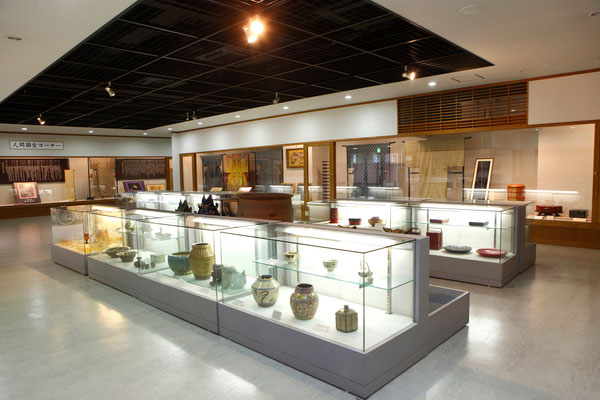 Photo:Okinawa Convention & Visitors Bureau
-
Address
-
Tel.+81-98-868-7810
-
Closed2nd and 4th Mondays (open if Monday is holiday and closed the next day) and around the New Yaer
-
Business HoursTue - Sun: 9am to 10pm / Mon: 9am to 6pm (except holiday)
-
Website

Other Woven textiles
- Nishijin Textiles
- Yuki Tsumugi Textiles
- Kurume Kasuri Textiles
- Ojiya Chijimi Textiles
- Hakata Textiles
- Ushikubi Tsumugi Textiles
- Chichibu Meisen Textiles
- Miyako Ramie Textiles
- Shiozawa Tsumugi Textiles
- Kumejima Tsumugi Textiles
- Omi Ramie Textiles
- Ryukyu Kasuri Textiles
- Kiryu Textiles
- Murayama Oshima Tsumugi Textiles
- Yumihama Gasuri Textiles
- Chibana Hanaori Textiles
- Hon Shiozawa Silk
- Oitama Tsumugi Textiles
- Ojiya Tsumugi Textiles
- Yaeyama Obi Sash Textiles
- Yaeyama Ramie Textiles
- Honba Oshima Tsumugi Textiles
- Shinshu Tsumugi Textiles
- Shuri Textiles
- Tama Textiles
- Yuntanza Hanaui Textiles
- Isesaki Gasuri Textiles
- Honba Kihachijo Fabric
- Nibutani Attus Bark Fabric
- Uetsu Shinafu Bark Fabric
- Awa Indigo Dyed Cotton Textiles
- Kijoka Banana Fiber Textiles
- Tokamachi Kasuri Textiles
- Tokamachi Akashi Chijimi Textiles
- Yonaguni Textiles
- Yuntanza Obi Sash Textiles
- Haebaru Flower Patterned Textiles
- Oku-Aizu Showa Karamushi Textiles
Other Crafts Made in Okinawa
- Tsuboya Ware
- Miyako Ramie Textiles
- Ryukyu Lacquerware
- Kumejima Tsumugi Textiles
- Ryukyu Kasuri Textiles
- Chibana Hanaori Textiles
- Yaeyama Obi Sash Textiles
- Yaeyama Ramie Textiles
- Shuri Textiles
- Yuntanza Hanaui Textiles
- Ryukyu Bingata Textiles
- Kijoka Banana Fiber Textiles
- Yonaguni Textiles
- Yuntanza Obi Sash Textiles
- Haebaru Flower Patterned Textiles
- Sanshin